Launch offer — valid today only

📄 Digital book in PDF · read it on your phone or print it

Firefighter Selection and Foundation Training in Drawings Name the Kit and Say the Drill Order Without Going Back to Your Notes

Selection stages, fire behaviour, PPE, hose and hydrants, ladder pitching, BA entry control, search patterns, RTC tools and hazard plates. Every topic has its own page: the drawing first, then what you need to remember. 65 illustrated pages.

START STUDYING THIS WAY

🔒 Secure checkout · PDF by email · 30-day guarantee

Every topic, its own pageEach piece of kit and each drill drawn, with the explanation alongside
65 illustrated pages9 parts, from the selection journey to the night-before checklist
Up-to-date sourcesBased on the UK National Operational Guidance and published fire and rescue service recruitment guidance
PDF by emailFormat

Look Inside the Book

Every page has one large drawing and a box with the steps and figures you need to know:

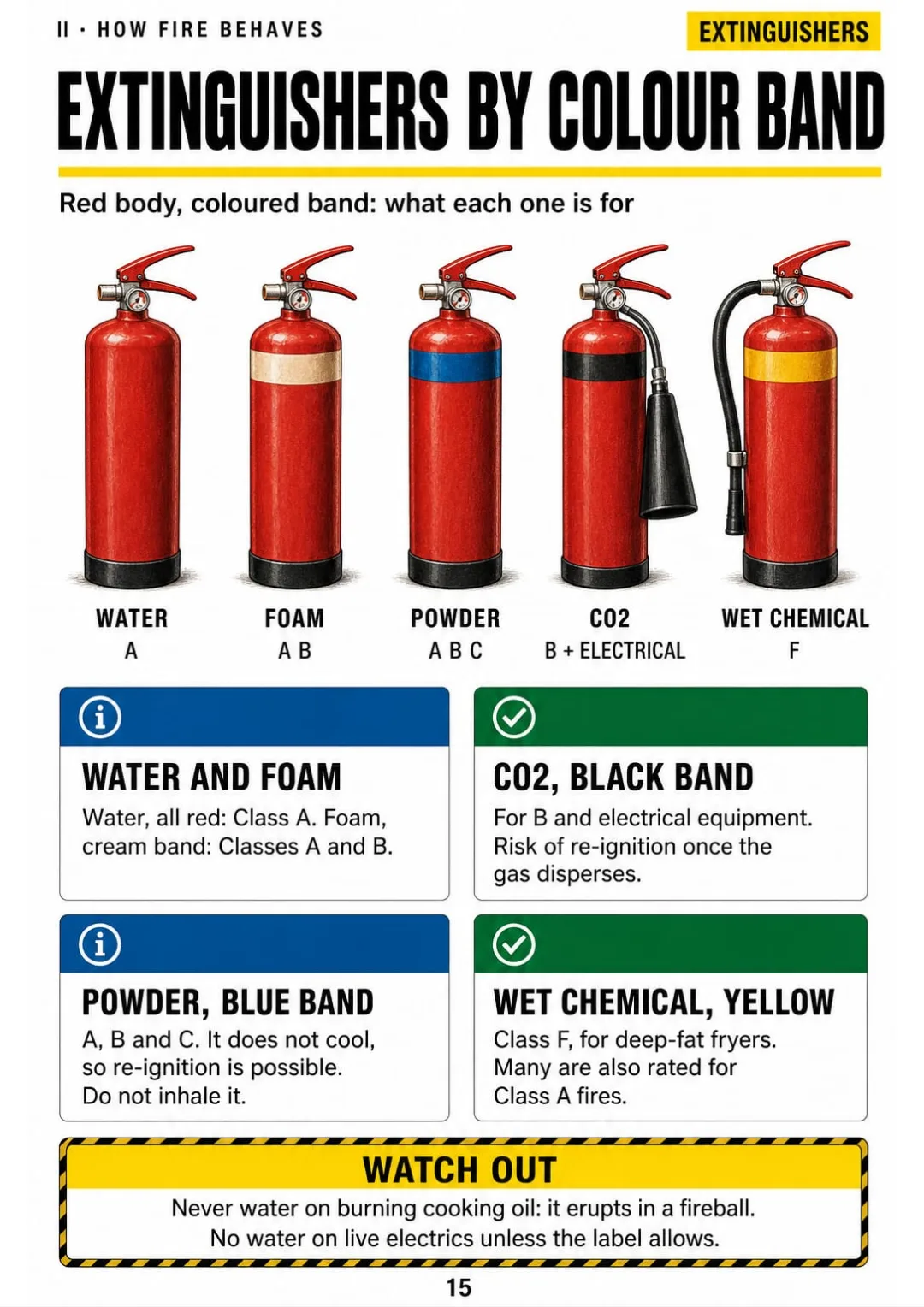
Under BS EN 3-7: red body, a colour zone of up to 5% shows the agent.
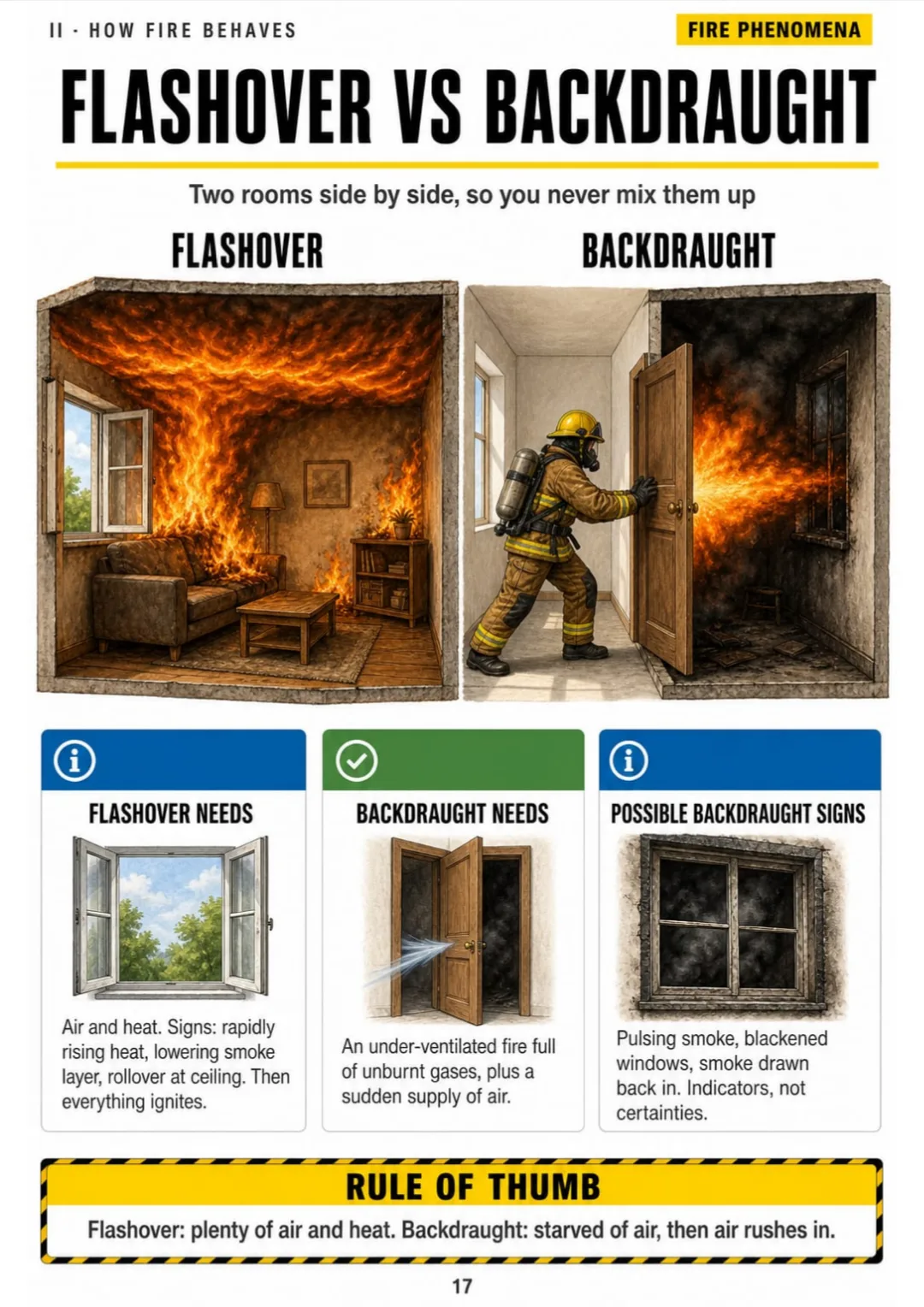
Flashover vs backdraught: ventilation is what separates them.
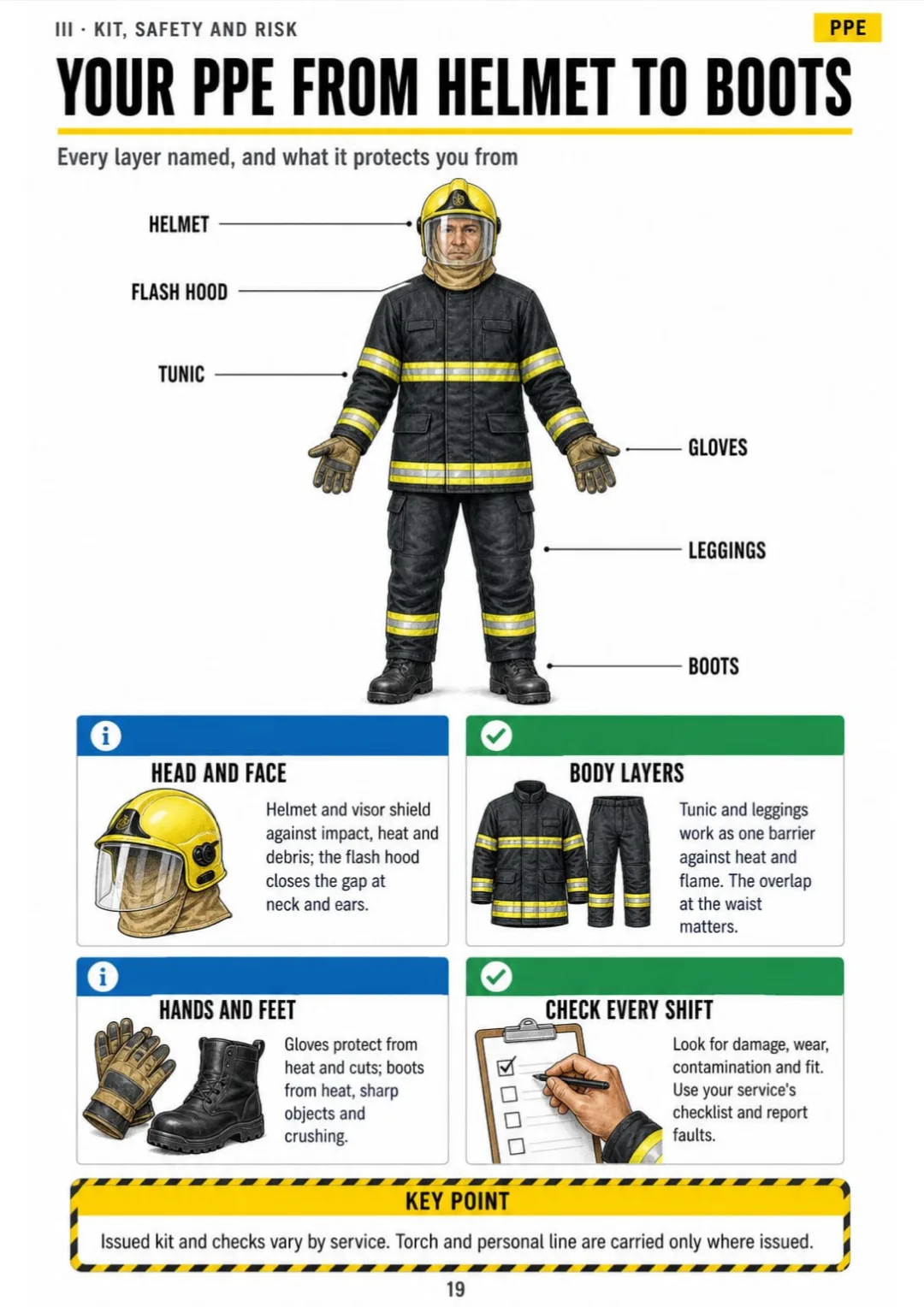
Helmet to boots: six items labelled, plus the shift check
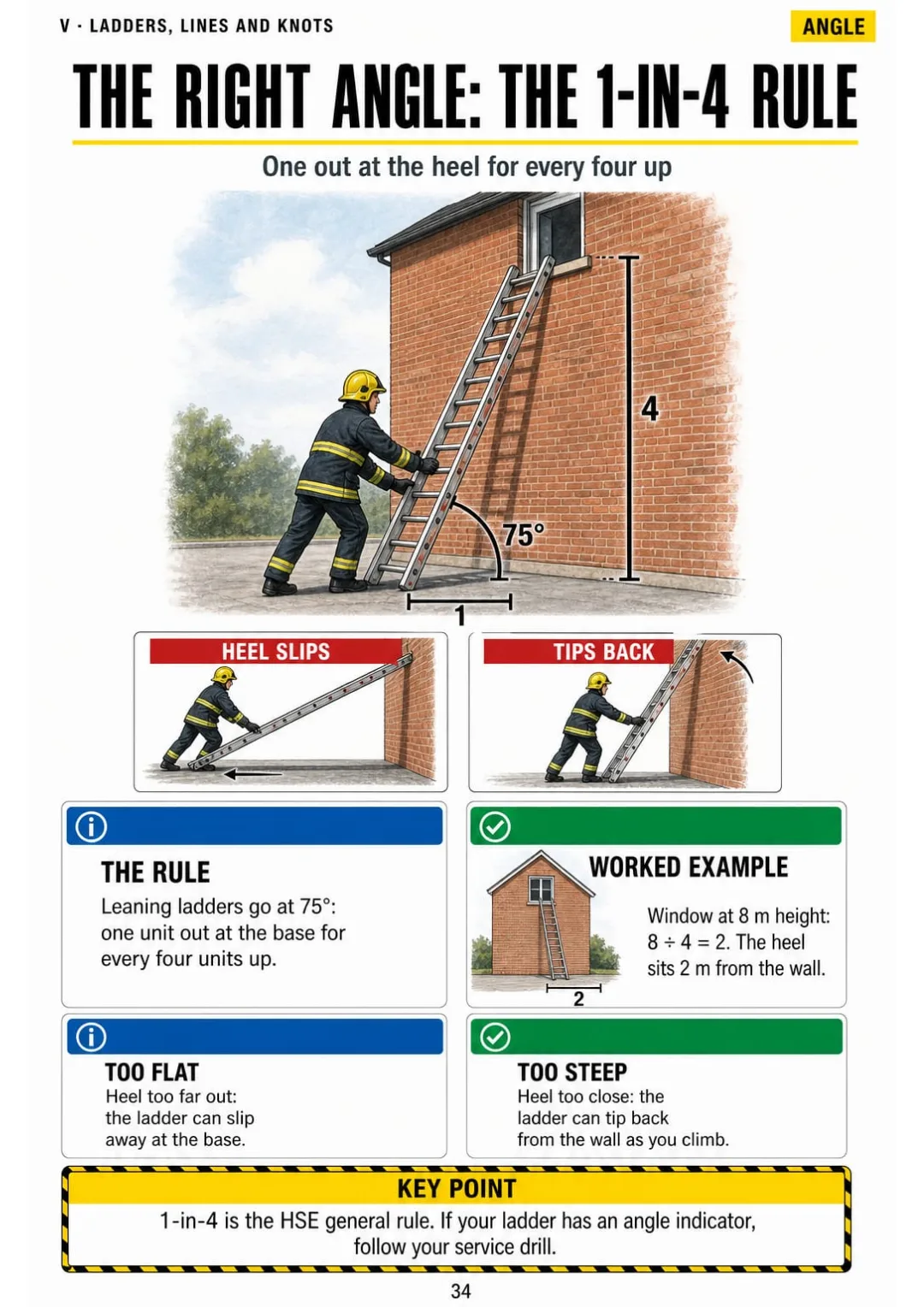
75°: one out for every four up. A window at 8 m means the heel 2 m from the wall
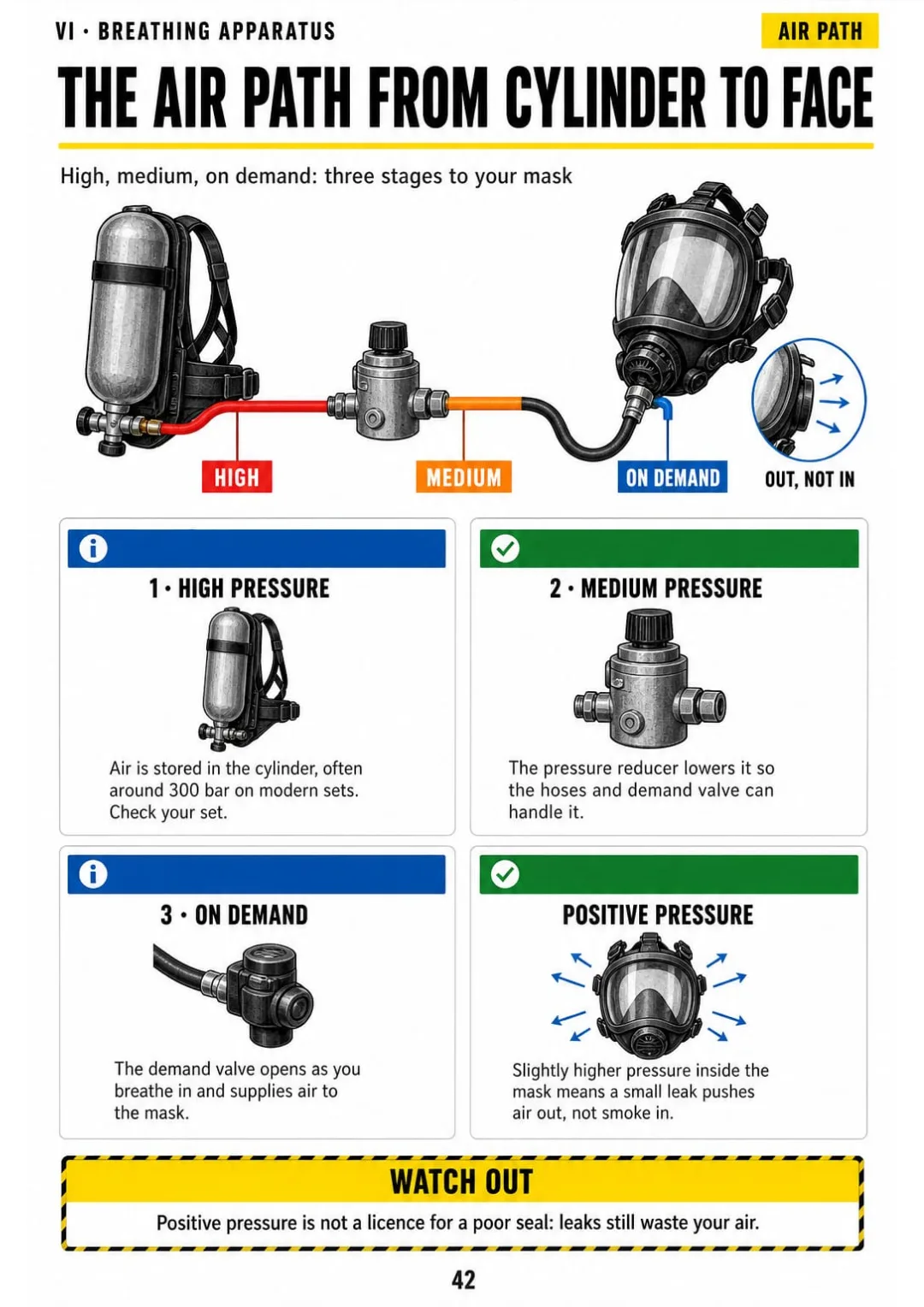
Cylinder to reducer to demand valve: high, medium, on demand
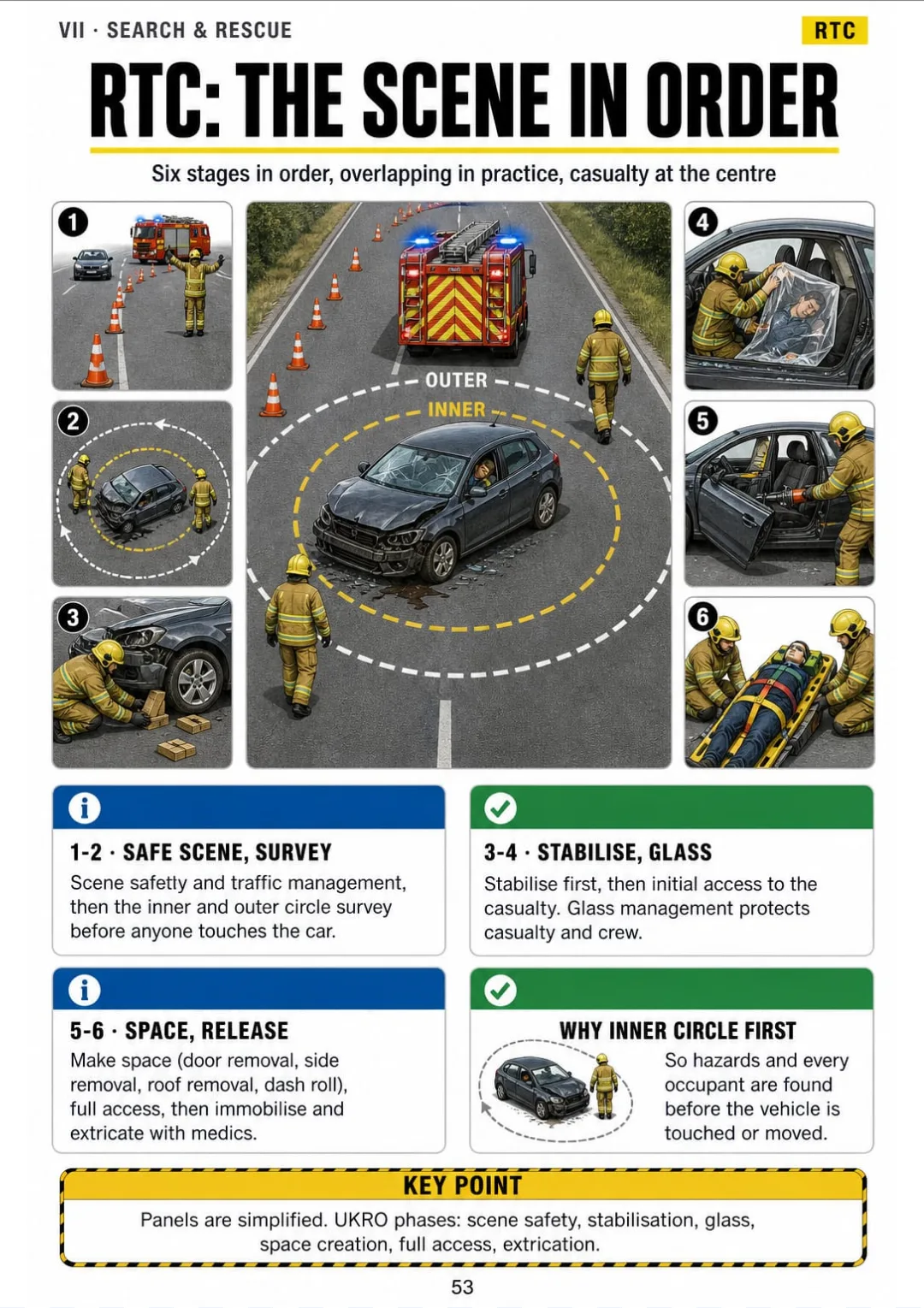
Scene safety, survey, stabilise, glass, space, release: the RTC order drawn.
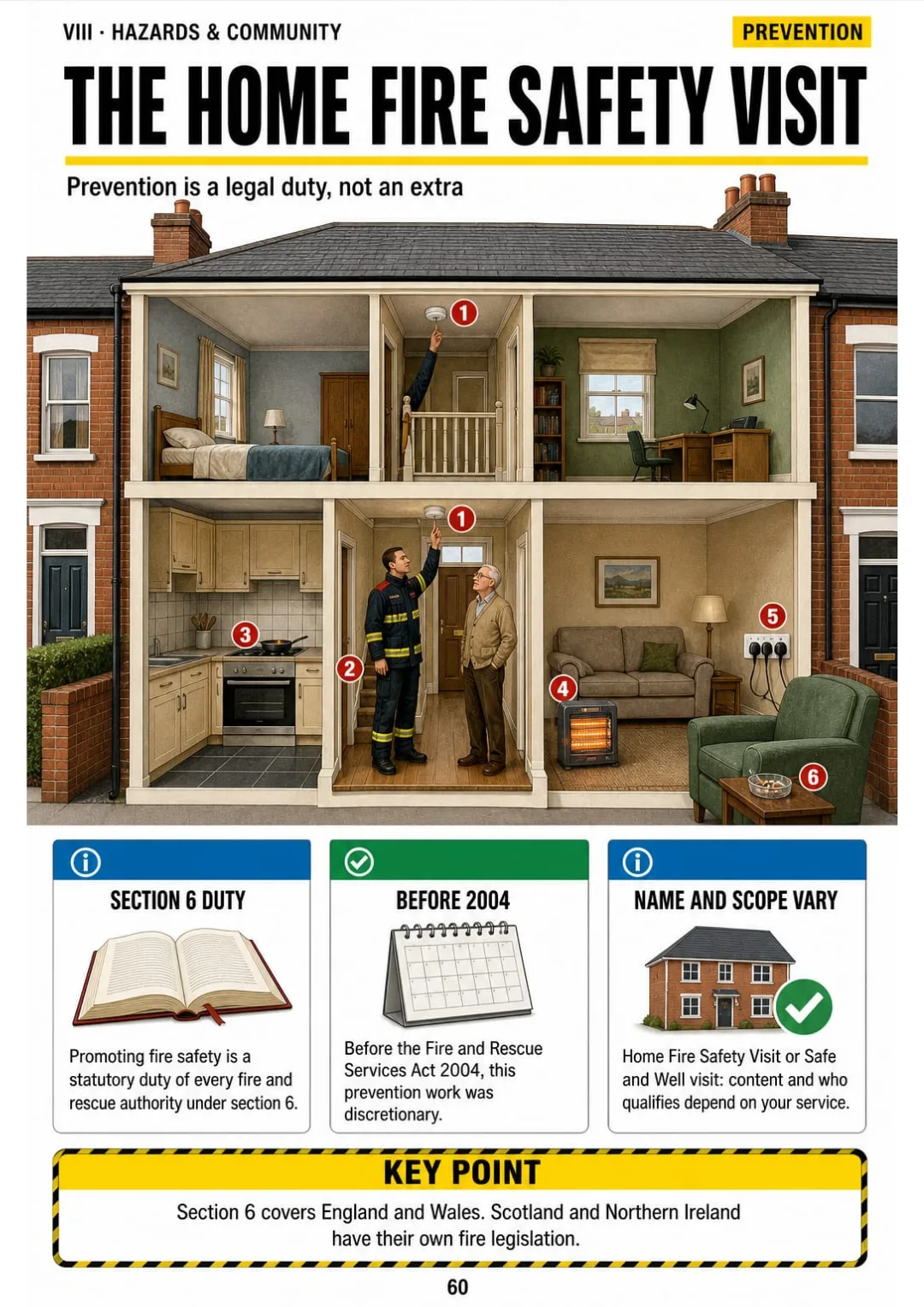
Prevention is a statutory duty under section 6 of the Fire and Rescue Services Act 2004
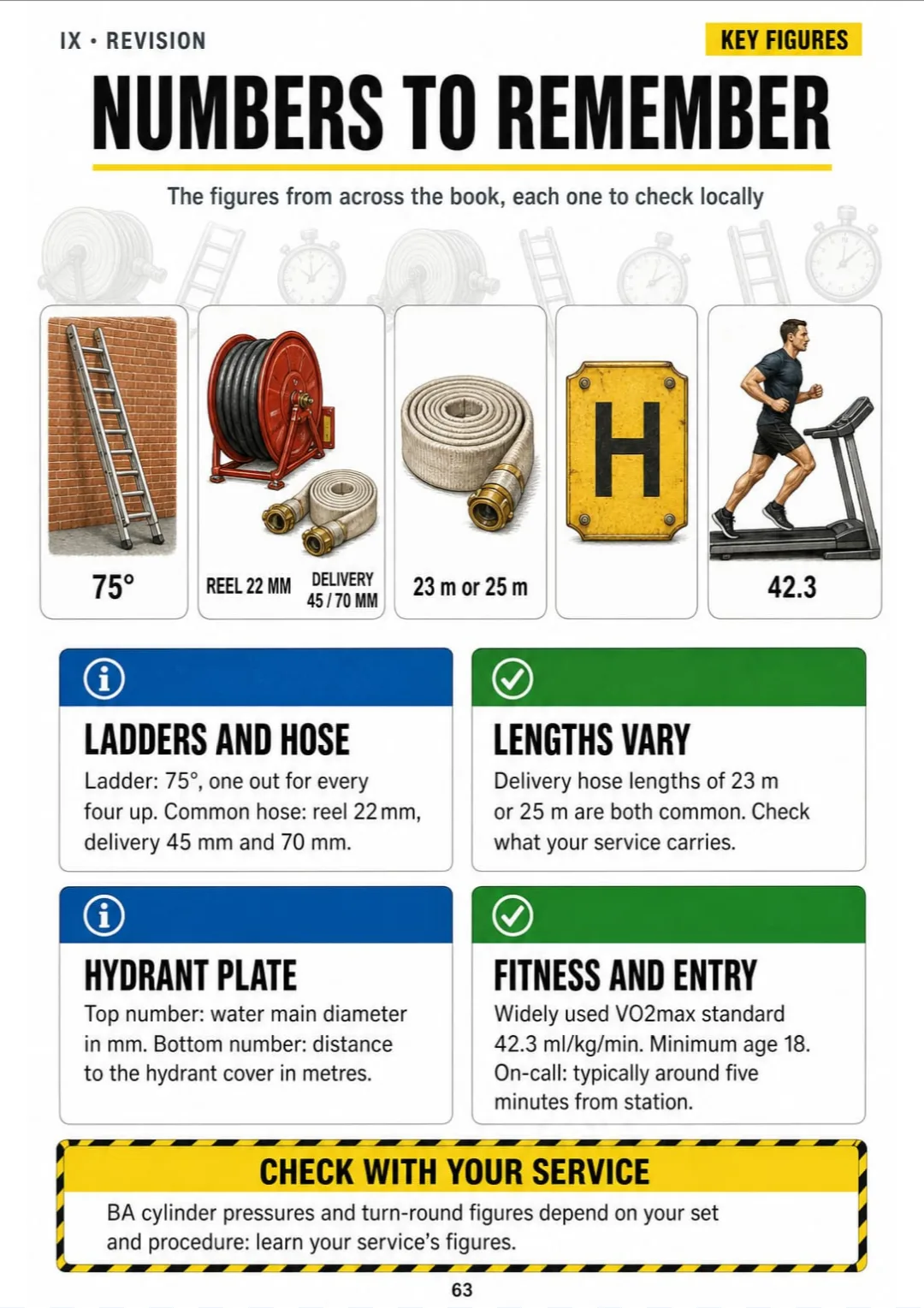
1-in-4, 45 and 70 mm, 23 or 25 m, 42.3 ml/kg/min: the key figures together

Swipe to see more →

These are real pages from the book. The table of contents is the full one: 9 parts and 61 topics.

The Problem Isn't You. It's How It Was Explained.

It's drill night. The instructor points at your fire kit and asks you to name each item, front and back.

You read it in the course notes. There it was one long paragraph: helmet, flash hood, tunic, leggings, gloves, boots and the rest. A list of words doesn't show you where anything sits on you.

Helmet to boots: six items labelled, plus the shift check

In the book, your PPE is a single drawing, helmet to boots. Nine items labelled, front and back, with the shift check in a box beside it.

Every other topic works the same way: the BA set with every part named, the 1-in-4 ladder rule, flashover and backdraught side by side, the RTC scene in order, the lorry hazard plate.

You picture the page, you name the kit, and you dress in the same order every time without going back to the notes.

COMPARE FOR YOURSELF

The Same Topic, Two Ways to Study It

THIS
  • Course notes and YouTube: ten sources, ten versions
  • Flashover and backdraught explained only in words
  • You reach the course still unsure
Flashover is defined as the transitional phase in the development of a compartment fire in which surfaces exposed to thermal radiation reach ignition temperature more or less simultaneously, resulting in rapid fire spread throughout the space. Backdraught, by contrast, occurs where a fire has become ventilation-controlled and the compartment contains a high concentration of unburnt pyrolysis products; the subsequent introduction of air, for instance on opening a door, may produce a rapid deflagration. Associated warning signs should be assessed in conjunction with prevailing ventilation conditions.
FOR THIS
  • Flashover and backdraught in one drawing, side by side
  • The warning signs in a box
  • You see it and you get it
Flashover vs backdraught: ventilation is what separates them.
CONTENTS

Take a Look at the 9 Parts and 61 Topics

Selection, fire behaviour, kit and risk, water, ladders and knots, breathing apparatus, search and RTC, hazards and revision: 65 pages, all illustrated

IGetting In: The Role and Selection · pp. 5-11
  1. Wholetime or On-Call: Two Ways In
  2. The Selection Journey, Stage by Stage
  3. The Written Tests: Numbers, Information, Situations
  4. The Role-Related Physical Tests
  5. The Fitness Test and How to Prepare
  6. The Interview: Behaviours, Not Facts
  7. Ranks and the Watch: Who's Who on Station
IIHow Fire Behaves · pp. 12-18
  1. The Fire Triangle and the Tetrahedron
  2. Heat Transfer: Conduction, Convection, Radiation
  3. Classes of Fire in the UK
  4. Extinguishers by Colour Band
  5. The Stages of a Compartment Fire
  6. Flashover vs Backdraught, Side by Side
  7. Smoke: Reading Colour, Speed and Volume
IIIKit, Safety and Risk · pp. 19-24
  1. Your PPE from Helmet to Boots
  2. Dressing in the Same Order Every Time
  3. The Dynamic Risk Assessment
  4. Safe Approach and Parking at an Incident
  5. Contaminants and Cleaning Your Kit
  6. The Phonetic Alphabet and Radio Basics
IVWater: Hose, Hydrants and Pumps · pp. 25-32
  1. The Appliance Lockers, Mapped
  2. Hose Types and Sizes
  3. Rolling, Running Out and Making Up Hose
  4. Couplings, Collecting Heads and Dividing Breechings
  5. Branches and Spray Patterns
  6. Reading a Hydrant Plate
  7. Getting Water from a Hydrant
  8. The Pump: Tank, Pressure and Supply
VLadders, Lines and Knots · pp. 33-40
  1. The Ladders on a UK Appliance
  2. The Right Angle: The 1-in-4 Rule
  3. Pitching a Ladder, Step by Step
  4. Climbing, Working and Carrying on a Ladder
  5. Lines: Types, Care and Storage
  6. Five Knots Every Recruit Is Shown
  7. The Bowline in Four Drawings
  8. Hauling Aloft with a Line
VIBreathing Apparatus · pp. 41-48
  1. The BA Set, Every Part Named
  2. The Air Path from Cylinder to Face
  3. The Pre-Use Check in the Same Order
  4. Starting Up and Donning the Set
  5. The Distress Signal Unit
  6. Entry Control: The Tally and the Board
  7. Working Duration and Turning Round
  8. BA Emergencies: What Happens Next
VIISearch, Rescue and Road Traffic Collisions · pp. 49-55
  1. Search Patterns as Simple Floor Plans
  2. Moving in Smoke: Low, Slow, in Contact
  3. Guidelines in Large Buildings
  4. Casualty Handling: Drags and Carries
  5. RTC: The Scene in Order
  6. RTC Tools: Cutters, Spreaders, Rams
  7. Stabilising a Vehicle
VIIIHazards, Signs and the Community · pp. 56-60
  1. Hazard Pictograms at a Glance
  2. Reading a Hazard Warning Plate on a Lorry
  3. Cordons and the Hot, Warm and Cold Zones
  4. Working with Other Services: METHANE
  5. Prevention: Home Fire Safety Visits
IXRevision and Quick Checks · pp. 61-65
  1. One-Page Map of the Whole Book
  2. Look-Alikes You Must Not Mix Up
  3. Numbers to Remember
  4. The Night-Before Checklist
  5. Frequent Recruit Mistakes, Before and After

One Page, One Topic, All Clear

Think of it this way:

You're at BA entry control on a training night. The instructor hands you a tally and asks where it goes, and why.

In the book you open the entry control page and see the tally and the board drawn, with each step in order beside them.

Cylinder to reducer to demand valve: high, medium, on demand

The same goes for the 1-in-4 ladder rule, flashover and backdraught, the RTC scene, the lorry hazard plate and search patterns: each one on its own page.

Firefighter Foundation Illustrated is 9 parts and 61 topics, all drawn, with a one-page map, the numbers to remember and a night-before checklist at the end.

What you see drawn, you don't have to memorize.

What's Inside Firefighter Foundation Illustrated:

Ipp. 5-11

Getting In: The Role and Selection

Wholetime or on-call, the selection stages, the written and role-related tests, fitness, the interview and who's who on station: you see what each stage looks for before you apply

IIpp. 12-18

How Fire Behaves

The fire triangle, heat transfer, UK fire classes, extinguisher colour bands, compartment fire stages, flashover vs backdraught and reading smoke

IIIpp. 19-24

Kit, Safety and Risk

Your PPE helmet to boots, dressing in order, the dynamic risk assessment, safe approach, contaminants and radio basics

IVpp. 25-32

Water: Hose, Hydrants and Pumps

The appliance lockers, hose types, rolling and running out, couplings and breechings, branches, hydrant plates and the pump

Vpp. 33-40

Ladders, Lines and Knots

The ladders on a UK appliance, the 1-in-4 rule, pitching step by step, climbing and carrying, lines, five knots, the bowline and hauling aloft

VIpp. 41-48

Breathing Apparatus

The BA set part by part, the air path, the pre-use check, donning, the DSU, entry control, working duration and BA emergencies: at entry control you know where the tally goes, and why

VIIpp. 49-55

Search, Rescue and Road Traffic Collisions

Search patterns as floor plans, moving in smoke, guidelines, drags and carries, the RTC scene in order, RTC tools and stabilisation

VIIIpp. 56-60

Hazards, Signs and the Community

Hazard pictograms, the lorry hazard plate, cordons and zones, METHANE and home fire safety visits

IXpp. 61-65

Revision and Quick Checks

A one-page map of the book, look-alikes, numbers to remember, the night-before checklist and frequent recruit mistakes

At the end of the book: A one-page map of the book, look-alikes not to mix up, numbers to remember and a night-before checklist.
Plus: 2 Free Books

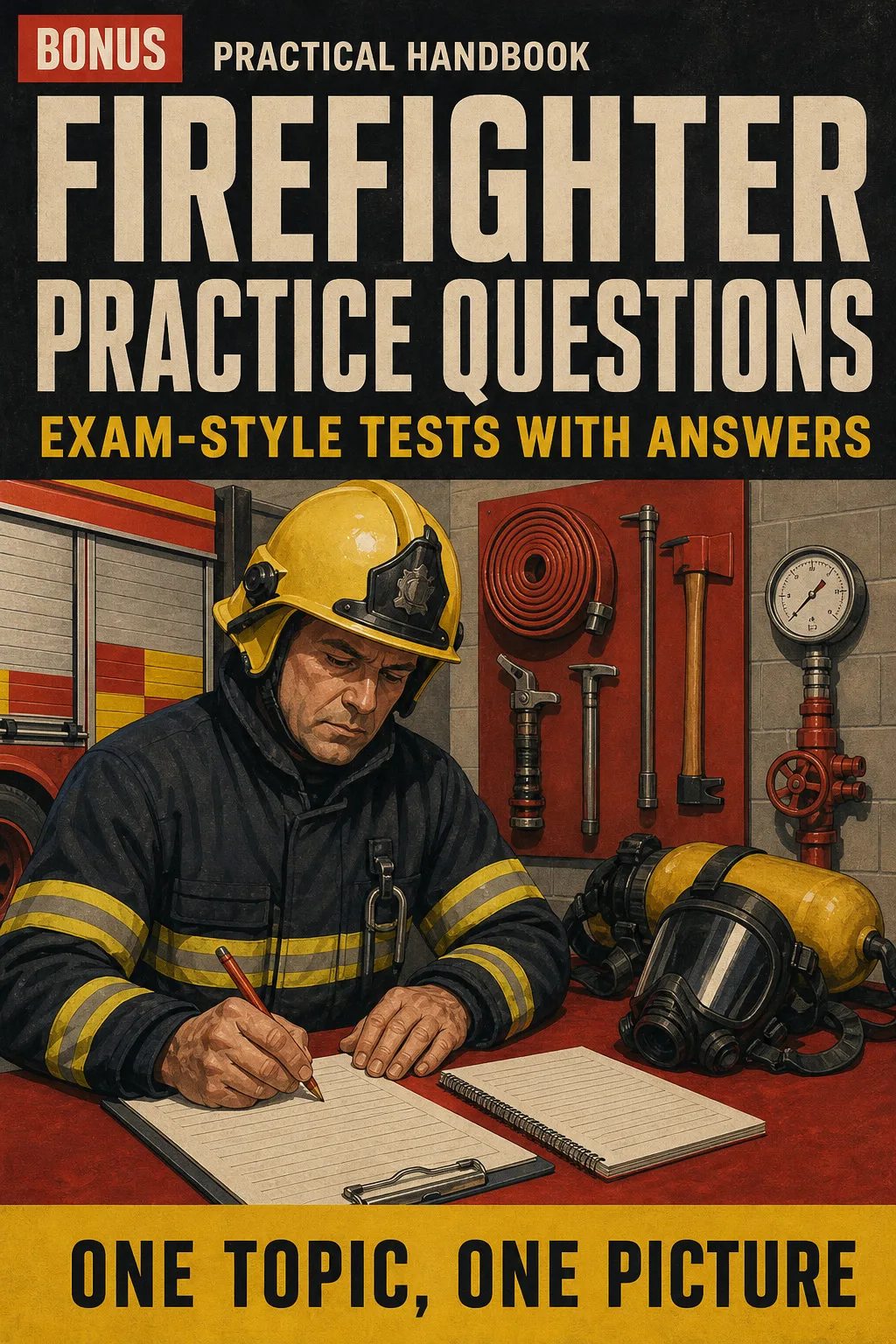
Firefighter Practice Questions: Exam-Style Tests with Answers

BONUS 1: «Firefighter Practice Questions: Exam-Style Tests with Answers»

Value on its own: US$ 17.90

Test yourself topic by topic and see straight away where you need to look again, with every answer explained.

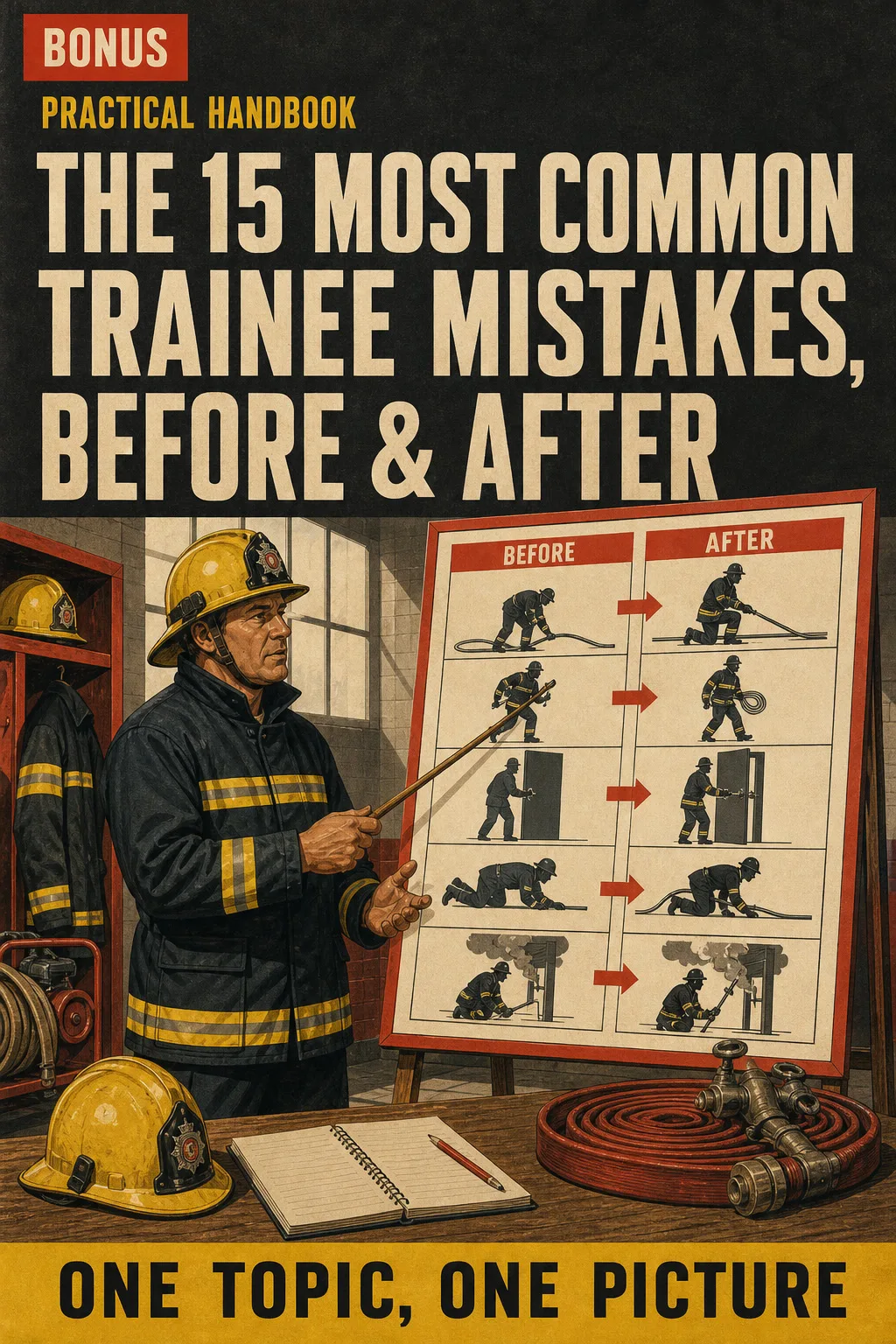
The 15 Most Common Trainee Mistakes, Before & After

BONUS 2: «The 15 Most Common Trainee Mistakes, Before & After»

Value on its own: US$ 14.90

See the slips new recruits make most often, from mixing up flashover and backdraught to knots tied the wrong way, drawn side by side with the right version.

Firefighter Foundation Illustrated with 2 Free Books

  • Firefighter Foundation Illustrated: 65 illustrated pagesUS$ 63
  • BONUS 1: Firefighter Practice Questions: Exam-Style Tests with AnswersUS$ 17.90
  • BONUS 2: The 15 Most Common Trainee Mistakes, Before & AfterUS$ 14.90
  • High-resolution PDF to printIncluded
Total value US$ 95.80
YOUR PRICE:
US$ 27
You save US$ 68.80
YES, I WANT FIREFIGHTER FOUNDATION ILLUSTRATED FOR US$ 27

📄 This is a digital PDF book sent to your email: nothing is printed or shipped.

Secure purchaseEncrypted payment30-day guarantee

PDF by email: We email you Firefighter Foundation Illustrated as a PDF, together with the two free books. It's a single payment: no installments, no extra charges.

Who This Book Is For

You're on the foundation course

You're on the foundation course

After the day's drills, you revise one page per topic in the same order: what it is, the drawing, the steps, the frequent mistake.

Your selection tests are coming up

Your selection tests are coming up

The stages, the written tests and the role-related tests laid out page by page, so you know what each one looks for. Always check the details with your service.

You're already on call or on station

You're already on call or on station

Kit, ladders, BA and hazard plates at a glance, to print and keep to hand before each drill night.

Everything You Get Today

US$ 95.80US$ 27
YES, I WANT FIREFIGHTER FOUNDATION ILLUSTRATED FOR US$ 27

📄 This is a digital PDF book sent to your email: nothing is printed or shipped.

30DAYS
GUARANTEE

30-Day Guarantee

Try Firefighter Foundation Illustrated for 30 days, bonus books included.

We refund everything if the file won't open, if the book isn't what you see here, if you were charged twice or if the email doesn't arrive. Just email us.

You pay once. No subscriptions.

Frequently Asked Questions

Is it for me if I'm changing career and haven't studied in years?

Yes. Each topic is one page in the same order, drawing first, so you can revise in short sessions after work. If you're applying, start with the selection part. If you've started the foundation course, go straight to BA, ladders, hose or RTC. Every page explains from scratch, but it goes as far as entry control, BA emergencies and stabilisation.

Where does the content come from?

It's based on the UK National Operational Guidance and the recruitment and training guidance published by fire and rescue services. Stages and standards vary by service: always check with yours.

Is it official material?

No. It's an independent illustrated study book, not produced or endorsed by any fire and rescue service or official body.

Does it replace the foundation course or my service's training?

No. It helps you revise what you're taught. It doesn't give you a certificate and doesn't count towards any qualification or selection score. Firefighting and rescue tasks are for trained personnel, following your service's procedures.

Are the practice questions the ones in the selection tests?

No. They're written for this book to help you test yourself topic by topic. They aren't official questions from any test.

When and how does it arrive?

As a PDF by email, together with the 2 free books, to the address you enter at checkout.

Do I have to pay every month?

No. It's a one-off payment, with no subscription.

Can I have it on paper?

Yes. The PDF is ready to print, at home or at a print shop, so you can keep it to hand.

How does the refund work?

You have 30 days. We refund everything if the file won't open, if the book isn't what you see on this page, if you were charged twice or if the email doesn't arrive: just email us.

Before You Close This Page

No more rereading notes that don't stick.

Your PPE, the BA set and the ladder angle: you see them drawn and it clicks.

You arrive at selection and on the course knowing where everything is.

Drawings make studying faster.

The book is right below.

One-time payment: US$ 27 · Guarantee: 30 days · PDF by email

YES, I WANT FIREFIGHTER FOUNDATION ILLUSTRATED FOR US$ 27

📄 This is a digital PDF book sent to your email: nothing is printed or shipped.